


TL;DR
The second advance-tax instalment for September 2026 is due on 15 September 2026. By this date, eligible taxpayers generally need to have paid 45% of their estimated annual advance-tax liability cumulatively, after considering the first instalment. Advance tax is calculated after estimating total taxable income and reducing eligible TDS/TCS and taxes already paid. Under the Income Tax Act, 1961, deferment of advance-tax instalments can attract interest under Section 234C. For Tax Year 2026–27 under the Income Tax Act, 2025, the corresponding provision is Section 425.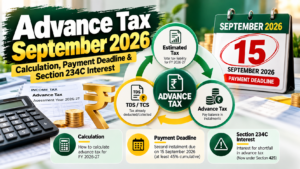
Introduction
September is an important month for taxpayers who are required to pay advance tax. The second instalment of advance tax is due on 15 September 2026, making it essential for individuals, businesses and professionals to reassess their expected income and tax liability before the deadline.
Advance tax is essentially a system of paying income tax during the year instead of waiting until the end of the financial year. It can apply when the taxpayer’s estimated tax liability, after reducing eligible TDS/TCS, reaches the prescribed threshold.
For taxpayers following the FY 2025–26 / AY 2026–27 framework, the relevant provisions continue under the Income-tax Act, 1961. For income falling under Tax Year 2026–27, the Income Tax Act, 2025 introduces new section numbers, with the advance-tax provisions corresponding to the earlier framework.
Understanding the September instalment, calculation method and Section 234C interest can help taxpayers avoid unnecessary interest and cash-flow surprises.
What Is Advance Tax?
Advance tax is income tax paid during the financial year based on estimated taxable income.
Instead of paying the entire tax liability after the year ends, eligible taxpayers make payments in instalments.
Advance tax can become relevant for income such as:
- Business income
- Professional income
- Capital gains
- Interest income
- Rental income
- Dividend income
- Other taxable income
TDS and TCS already deducted or collected are generally considered while determining the remaining advance-tax liability.
Who Has to Pay Advance Tax?
Under the existing framework, advance tax generally applies when the estimated tax payable for the year is ₹10,000 or more, after considering the applicable tax credits and subject to prescribed exceptions.
For example, senior citizens who do not have income from business or profession may be eligible for an exemption from advance-tax payment under the applicable provisions.
Businesses, professionals and individuals with significant non-salary income should therefore evaluate their estimated tax liability rather than assuming that TDS alone will cover their tax.
Why Is 15 September 2026 Important?
For taxpayers paying advance tax under the regular instalment system, the second instalment is due on 15 September 2026.
The cumulative target by this date is generally:
45% of estimated annual advance-tax liability
This is not an additional 45% payment on top of the June instalment.
Instead, the taxpayer should calculate the total amount that should have been paid cumulatively by September and reduce the amount already paid.
Example
Suppose your estimated annual advance-tax liability is:
₹2,00,000
By 15 September, the cumulative amount should generally be:
45% × ₹2,00,000 = ₹90,000
If you already paid ₹30,000 in June, the September instalment would generally be:
₹90,000 − ₹30,000 = ₹60,000
The actual calculation should also account for changes in estimated income and applicable TDS/TCS credits.
Advance Tax Instalment Schedule
For taxpayers following the regular advance-tax payment schedule, the cumulative targets are generally:
| Due Date | Cumulative Advance Tax |
|---|---|
| 15 June | 15% |
| 15 September | 45% |
| 15 December | 75% |
| 15 March | 100% |
For taxpayers covered by certain presumptive taxation provisions, different payment rules can apply.
The important September target is therefore 45% cumulatively by 15 September.
How to Calculate Advance Tax for September 2026
Calculating advance tax should start with an updated estimate of your full-year taxable income.
Step 1: Estimate Your Total Income
Calculate your expected income for the relevant tax year.
Include:
- Business profits
- Professional receipts
- Salary income
- Rental income
- Interest income
- Capital gains
- Dividend income
- Other taxable receipts
Do not calculate advance tax only from your business turnover. The calculation should be based on the applicable taxable income after considering relevant deductions and provisions.
Step 2: Calculate Estimated Tax Liability
Apply the relevant tax rates and provisions to your estimated taxable income.
Your tax calculation may depend on:
- Applicable tax regime
- Type of income
- Applicable deductions
- Rebates
- Surcharge
- Health and education cess
- Other applicable provisions
Step 3: Reduce TDS and TCS
If tax has already been deducted or collected during the year, consider the available TDS/TCS credit while calculating the remaining advance-tax liability.
For example:
Estimated tax liability: ₹3,00,000
Expected TDS/TCS: ₹1,00,000
Estimated balance:
₹3,00,000 − ₹1,00,000 = ₹2,00,000
The advance-tax instalments are then calculated with reference to the remaining liability, subject to the applicable rules.
Step 4: Reduce Advance Tax Already Paid
If you have already paid an advance-tax instalment, subtract it from the cumulative amount due.
Step 5: Calculate the September Instalment
The September payment should bring cumulative advance tax to the applicable 45% level.
September Advance Tax Calculation Example
Consider a business owner who estimates:
Annual taxable income: ₹12,00,000
Suppose the estimated final tax liability after applicable calculations is:
₹2,00,000
Assume expected TDS/TCS credit is:
₹20,000
Remaining advance-tax liability:
₹2,00,000 − ₹20,000 = ₹1,80,000
The cumulative amount required by 15 September would generally be:
45% × ₹1,80,000 = ₹81,000
If ₹27,000 was already paid in June:
₹81,000 − ₹27,000 = ₹54,000
So, approximately ₹54,000 would need to be paid in September to reach the 45% cumulative target, assuming the estimates and credits remain unchanged.
What If Your Income Changes After June?
This is extremely important for businesses and professionals.
Advance tax is based on estimated income, so the calculation should be updated when your financial position changes significantly.
For example, suppose a business initially estimated annual taxable income of ₹8 lakh but later expects ₹15 lakh because of:
- Higher sales
- New contracts
- Capital gains
- Increased professional receipts
- Higher interest income
The taxpayer should revise the estimated tax liability rather than continuing to make instalments based on the old estimate.
What Is Section 234C?
For FY 2025–26 / AY 2026–27, Section 234C of the Income-tax Act, 1961 deals with interest for deferment of advance-tax instalments.
The provision is designed to discourage taxpayers from significantly delaying advance-tax payments.
For taxpayers under the new Income Tax Act, 2025, the corresponding provision is Section 425.
How Is Section 234C Interest Calculated?
For taxpayers who are liable to pay advance tax and have deferred the required instalments, Section 234C can result in interest.
For the regular advance-tax schedule, the required cumulative percentages are:
- 15% by 15 June
- 45% by 15 September
- 75% by 15 December
- 100% by 15 March
Interest is generally calculated at 1% per month or part of a month on the applicable shortfall for the prescribed period.
September Example
Suppose the tax payable through advance tax is ₹2,00,000.
Required cumulative payment by 15 September:
45% × ₹2,00,000 = ₹90,000
But suppose the taxpayer has paid only ₹50,000 cumulatively.
Shortfall:
₹90,000 − ₹50,000 = ₹40,000
If the shortfall attracts Section 234C interest for the prescribed period, the applicable interest would generally be calculated at 1% on the relevant shortfall.
The exact interest computation depends on the taxpayer’s payment history and applicable statutory conditions.
Important Exception for Unexpected Capital Gains and Certain Other Income
Taxpayers should not automatically assume that every shortfall results in Section 234C interest.
The law provides relief in certain circumstances where income arises unexpectedly or increases after the relevant instalment date, subject to prescribed conditions.
This can be particularly relevant for:
- Capital gains
- Lottery or similar winnings
- Certain unexpected income
- Other specified circumstances
Where such income could not reasonably have been anticipated before the relevant instalment, the treatment of advance-tax interest can differ.
Taxpayers should examine the specific statutory conditions rather than assuming that an interest charge automatically applies.
Advance Tax vs Self-Assessment Tax
These two are often confused.
Advance Tax
Paid during the tax year based on estimated income.
Self-Assessment Tax
Generally paid after the end of the tax year when calculating the final tax payable before filing the Income Tax Return.
For example:
During the year → Advance Tax
After year-end, before ITR filing → Self-Assessment Tax
Understanding this difference is important when planning tax payments.
What Happens If You Miss the 15 September Deadline?
Missing the September advance-tax deadline does not necessarily mean that you cannot pay the tax afterward.
However, delaying payment can potentially result in interest consequences under the applicable provisions.
If you realise that your September payment was insufficient, it is generally better to reassess your tax position and make the required payment rather than waiting until the next instalment or year-end.
The later you identify the shortfall, the greater the potential compliance impact can become.
Common Advance Tax Mistakes in September 2026
1. Calculating Tax Only on Business Income
Taxpayers sometimes ignore capital gains, interest, rent or other taxable income.
2. Ignoring TDS Credits
If TDS is already deducted, failing to account for it can lead to unnecessary advance-tax payments.
3. Using Last Year’s Income
Advance tax should be based on the current year’s estimated income rather than blindly copying the previous year’s figures.
4. Forgetting Capital Gains
Property, shares, mutual funds and other capital assets can generate taxable gains that affect advance-tax liability.
5. Ignoring the September Cumulative Target
The September requirement is 45% cumulatively, not 45% of the remaining amount after June.
6. Paying Without Reconciliation
Businesses should reconcile TDS, TCS and advance-tax challans before finalising their calculations.
7. Waiting Until March
Waiting until the final instalment to calculate the entire year’s tax can result in avoidable interest and cash-flow pressure.
Advance Tax September 2026 Checklist
Before making the September payment, taxpayers should review:
- Current-year estimated income
- Business/professional profits
- Capital gains
- Interest and rental income
- TDS credits
- TCS credits
- June advance-tax payment
- Estimated annual tax liability
- Applicable tax regime
- Deductions and rebates
- Surcharge and cess
- 45% September target
- Payment challan details
How Businesses Can Plan Advance Tax Better
Businesses should not wait until 15 September to start the calculation.
A better approach is to maintain a rolling tax estimate.
Monthly Profit Review
Review revenue and expenses every month.
Quarterly Tax Projection
Update estimated annual taxable income before each advance-tax instalment.
TDS/TCS Reconciliation
Regularly compare available tax credits with accounting records and tax statements.
Cash-Flow Planning
Set aside funds for upcoming tax instalments instead of arranging money immediately before the deadline.
Professional Review
Businesses with complex transactions, capital gains, multiple income sources or significant tax liabilities can benefit from professional tax planning.
Conclusion
The 15 September 2026 advance-tax deadline is an important compliance date for eligible taxpayers.
By this date, taxpayers following the regular instalment schedule generally need to have paid 45% of their estimated annual advance-tax liability cumulatively, after considering applicable TDS/TCS and previous advance-tax payments.
Section 234C of the Income-tax Act, 1961 can apply where prescribed advance-tax instalments are deferred or underpaid. For Tax Year 2026–27 under the Income Tax Act, 2025, the corresponding provision is Section 425.
The best approach is to calculate advance tax using updated income estimates rather than relying solely on previous-year figures. Businesses and professionals should also review TDS, TCS, capital gains and other income before determining their September liability.
Frequently Asked Questions
1. What is the advance-tax due date in September 2026?
The second advance-tax instalment is due on 15 September 2026.
2. How much advance tax should be paid by 15 September?
Under the regular instalment schedule, cumulative advance-tax payment should generally reach 45% of the annual advance-tax liability by 15 September.
3. Is the September payment 45% of the total tax liability?
It is generally 45% cumulatively, not an additional 45% after the June payment. Amounts already paid in earlier instalments are considered.
4. What is Section 234C interest?
Section 234C provides for interest on deferment of prescribed advance-tax instalments under the Income-tax Act, 1961. The applicable rate is generally 1% per month or part of a month, subject to the statutory calculation.
5. What is Section 234C called under the Income Tax Act, 2025?
For Tax Year 2026–27 onward, the corresponding provision is Section 425 under the Income Tax Act, 2025.
6. Can TDS reduce advance-tax liability?
Yes. Expected or available TDS/TCS credits are generally considered while calculating the remaining tax payable through advance tax.
7. What happens if I pay less advance tax by 15 September?
A shortfall can potentially result in interest under the applicable advance-tax provisions. The exact consequence depends on the amount paid, timing and statutory conditions.
8. Do businesses have to pay advance tax?
Businesses may have to pay advance tax if their estimated tax liability meets the applicable conditions.
9. Do professionals have to pay advance tax?
Yes. Professionals can be liable for advance tax where the applicable conditions are met.
10. Can advance tax be revised during the year?
Yes. Taxpayers should update their advance-tax calculations when their estimated income changes significantly during the year.
11. Is advance tax the same as self-assessment tax?
No. Advance tax is generally paid during the tax year based on estimated income, whereas self-assessment tax is generally paid after the tax year when finalising the tax liability before filing the return.
12. Should I consult a CA for September advance tax?
Businesses and professionals with variable income, capital gains, multiple income sources or significant tax liabilities can benefit from professional assistance in estimating taxable income, reconciling TDS/TCS and calculating advance-tax instalments.
Blog By : CA Junaid Khan
Written by CA Junaid Ahmed Khan, Junaid Khan & Co., Bhopal.