

How to Start a Business in India in 2026: Registration, GST, PAN & Compliance Checklist
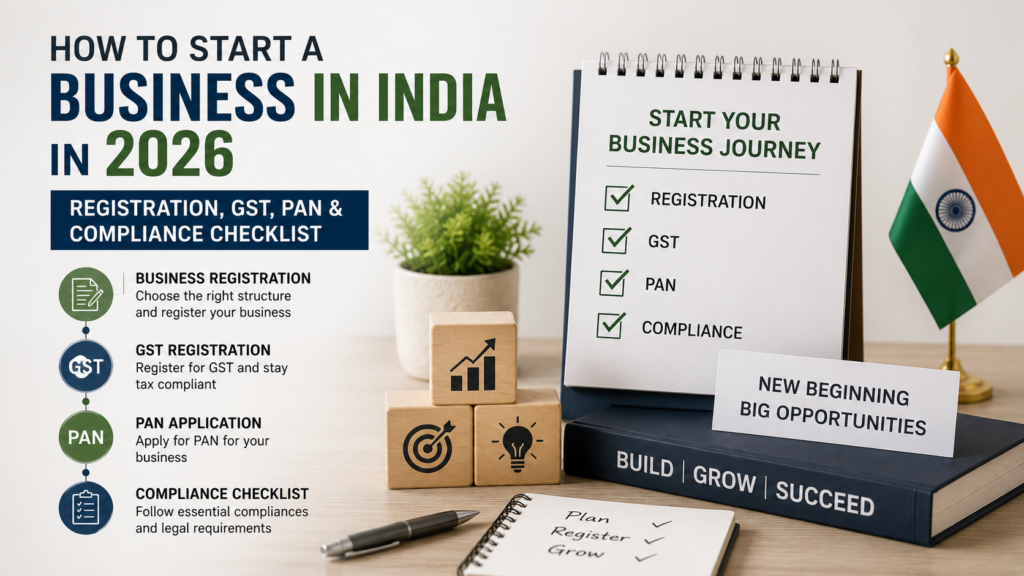
TL;DR Starting a business in India involves more than developing a great idea. Entrepreneurs must choose an appropriate business structure, complete legal registrations, obtain PAN and GST registration where applicable, maintain proper accounting records, and comply with tax and regulatory requirements. Careful planning from the beginning helps businesses avoid compliance issues and build a strong foundation for long-term growth. Introduction India continues to be one of the world’s fastest-growing startup ecosystems, creating significant opportunities for entrepreneurs across manufacturing, technology, professional services, retail, healthcare, education, and e-commerce. However, starting a business requires much more than securing customers or arranging capital. Every business must satisfy various legal, financial, and tax-related obligations before commencing operations. Choosing the wrong business structure or overlooking mandatory registrations can create avoidable compliance issues later. This guide explains the key steps involved in setting up a business in India and highlights the registrations and compliance requirements every entrepreneur should understand. Step 1: Choose the Right Business Structure Selecting an appropriate legal structure is one of the most important decisions for any entrepreneur because it affects taxation, compliance obligations, ownership, fundraising, and business expansion. Common business structures include: Sole Proprietorship Suitable for individual entrepreneurs operating relatively small businesses with straightforward ownership. Advantages include: Easy to start. Lower compliance requirements. Complete owner control. Simple decision-making. Partnership Firm A partnership involves two or more persons carrying on a business together under a partnership agreement. Suitable for: Family businesses. Professional firms. Trading businesses. Service businesses. Limited Liability Partnership (LLP) LLPs combine operational flexibility with limited liability protection for partners. Suitable for: Professional firms. Consulting businesses. Service providers. Growing startups. Private Limited Company Private Limited Companies are generally preferred by startups planning rapid growth, external investment, or structured corporate governance. Key advantages include: Separate legal identity. Limited liability. Better investor confidence. Easier fundraising opportunities. Greater business credibility. One Person Company (OPC) An OPC allows a single entrepreneur to operate through a corporate structure while retaining limited liability. Step 2: Register Your Business The registration process varies depending on the business structure selected. Generally, registration involves: Selecting a suitable business name. Preparing constitutional documents. Completing required applications. Obtaining registration certificates from the appropriate authorities. Maintaining statutory records after incorporation. Professional assistance helps ensure that documents are prepared correctly and registrations are completed efficiently. Step 3: Apply for PAN & TAN Permanent Account Number (PAN) is an essential tax identification number required for most businesses. Tax Deduction and Collection Account Number (TAN) may also be required where tax deduction obligations apply. These registrations support: Income Tax compliance. Banking requirements. Financial transactions. Return filing. TDS compliance. Step 4: GST Registration GST registration may be mandatory depending on turnover thresholds, business activities, or other criteria prescribed under GST law. Businesses should carefully evaluate whether registration is mandatory or beneficial based on their operations. GST registration enables businesses to: Obtain a GST Identification Number (GSTIN). Issue GST-compliant invoices. Collect GST where applicable. Claim eligible Input Tax Credit, subject to conditions. Meet statutory compliance obligations. Step 5: Open a Business Bank Account Maintaining separate business and personal finances improves accounting accuracy and supports better financial management. A dedicated business account helps with: Recording business transactions. GST compliance. Loan applications. Financial reporting. Audit readiness. Step 6: Obtain Necessary Licenses Depending on the industry and business activities, additional registrations or licenses may be required. Examples include: Shop & Establishment Registration. Professional Tax Registration (where applicable). Trade License. Import Export Code (IEC). FSSAI Registration for food businesses. MSME/Udyam Registration. Industry-specific approvals. Entrepreneurs should identify applicable registrations before commencing operations. Step 7: Business Compliance Checklist After registration, businesses must continue meeting ongoing compliance obligations. Important compliance activities include: Maintaining books of accounts. Filing Income Tax Returns. Filing GST returns (where applicable). Deducting and depositing TDS, if required. Preparing financial statements. Conducting audits where applicable. Preserving statutory records. Complying with labour and other regulatory requirements. Common Mistakes New Businesses Make Many startups face avoidable compliance issues because of poor planning during the initial stages. Common mistakes include: Choosing an unsuitable business structure. Delaying GST registration where required. Mixing personal and business finances. Ignoring bookkeeping. Missing statutory filing deadlines. Poor documentation. Not seeking professional advice. Inadequate tax planning. Why Hiring a Chartered Accountant Is Important for New Businesses Starting a business involves legal registrations, taxation, accounting, and ongoing compliance. While many registration processes can be completed online, choosing the correct structure and ensuring ongoing compliance often requires professional expertise. A Chartered Accountant can help entrepreneurs: Select the most suitable business structure. Complete company, LLP, or proprietorship registration. Obtain PAN, TAN, and GST registration where applicable. Set up accounting and bookkeeping systems. Maintain statutory compliance. File Income Tax and GST returns. Assist with payroll and TDS compliance. Prepare financial statements. Provide business tax planning. Offer financial advisory for business growth. Professional guidance during the initial stages helps reduce compliance risks and allows entrepreneurs to focus on building their business. Startup Compliance Checklist Once your business is operational, maintaining regular compliance is essential to avoid penalties and ensure smooth operations. Business Registration ✔ Complete registration under the appropriate business structure. PAN & TAN ✔ Obtain PAN for the business. ✔ Apply for TAN if tax deduction obligations apply. GST Registration ✔ Register under GST if required under applicable provisions. ✔ Maintain GST-compliant invoices and records. Business Bank Account ✔ Open a dedicated current account for business transactions. Accounting & Bookkeeping ✔ Record all financial transactions accurately. ✔ Maintain purchase, sales, and expense registers. Income Tax Compliance ✔ File Income Tax Returns within the prescribed timelines. ✔ Pay advance tax where applicable. GST Compliance ✔ File GST returns on time. ✔ Reconcile GST records regularly. ✔ Monitor Input Tax Credit eligibility. TDS Compliance ✔ Deduct TDS wherever applicable. ✔ Deposit TDS within prescribed timelines. ✔ File TDS returns accurately. Statutory Records ✔ Preserve invoices, bank statements, contracts, payroll records, and statutory registers. Business Licenses ✔ Renew licenses and registrations before their expiry, wherever required. Annual Financial Statements ✔ Prepare Profit & Loss Account, Balance Sheet, and other