
GST Registration vs GST Composition Scheme: Which Is Better for Small Businesses?
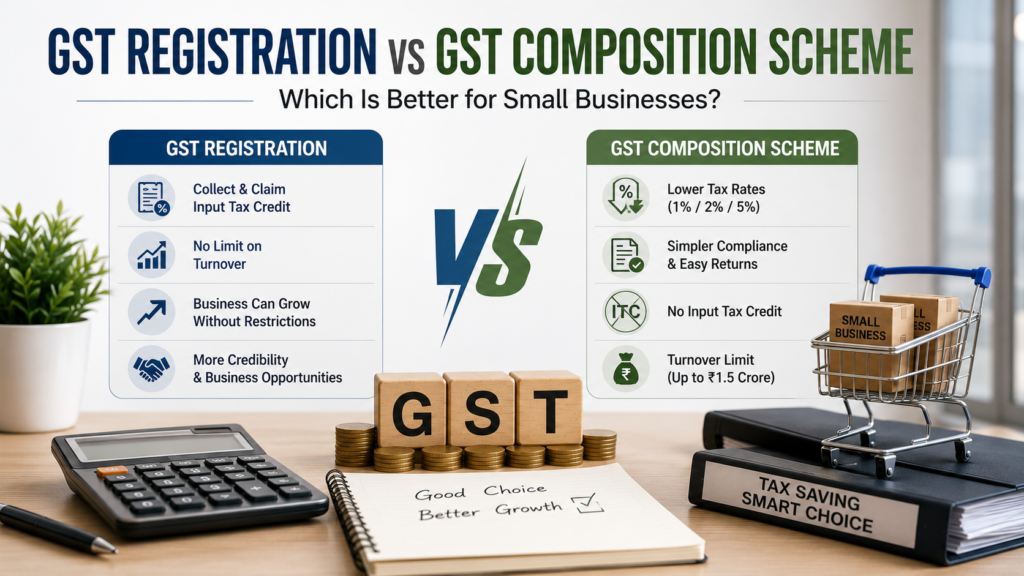
TL;DR Choosing between Regular GST Registration and the GST Composition Scheme is an important decision for every small business. While the Composition Scheme offers simplified compliance and reduced administrative burden for eligible taxpayers, Regular GST Registration provides broader business opportunities, Input Tax Credit (ITC) benefits, and greater flexibility for growing enterprises. The right choice depends on your business model, turnover, customers, and long-term growth plans. Introduction For many entrepreneurs, one of the earliest tax decisions is choosing the appropriate GST framework for their business. This decision influences not only day-to-day compliance but also cash flow, pricing strategy, customer relationships, and future expansion. Many small business owners assume that the Composition Scheme is always the better option because of its simpler compliance requirements. Others immediately choose Regular GST Registration without fully understanding the obligations involved. In reality, both options have distinct advantages and limitations. Selecting the right one requires a careful assessment of your business operations, expected turnover, customer profile, and future plans. This guide explains the key differences between the two so you can make an informed decision. What Is Regular GST Registration? Regular GST Registration is the standard GST framework under which eligible businesses collect GST from customers, file prescribed returns, maintain detailed records, and comply with applicable GST provisions. Businesses registered under the regular scheme generally have broader operational flexibility and can participate in a wider range of commercial activities. Some key features include: Collection of GST from customers. Eligibility to claim Input Tax Credit (subject to applicable conditions). Issuance of tax invoices. Participation in B2B transactions. Ability to deal with customers requiring GST-compliant invoices. Greater suitability for expanding businesses. What Is the GST Composition Scheme? The GST Composition Scheme is a simplified compliance mechanism available to eligible small taxpayers subject to prescribed turnover limits and other conditions under GST law. Instead of following the full compliance framework applicable to regular taxpayers, eligible businesses under the Composition Scheme generally benefit from simplified tax payment procedures and reduced return filing obligations. The scheme is primarily designed to reduce the compliance burden on small businesses with relatively straightforward operations. Key Differences Between Regular GST Registration and the Composition Scheme Feature Regular GST Registration GST Composition Scheme GST Collection GST collected from customers Composition taxpayers generally cannot collect GST separately from customers Input Tax Credit Eligible to claim ITC subject to conditions ITC generally not available Tax Invoice Can issue tax invoices Cannot issue standard GST tax invoices in the same manner as regular taxpayers Compliance Detailed compliance and return filing Simplified compliance for eligible taxpayers Business Expansion Suitable for growing businesses Best suited for smaller businesses meeting eligibility conditions Business Flexibility Greater operational flexibility Certain restrictions apply under the scheme Advantages of Regular GST Registration Many growing businesses choose Regular GST Registration because it offers long-term operational advantages. Input Tax Credit (ITC) Eligible businesses can claim Input Tax Credit on qualifying business purchases, helping reduce the overall tax cost and improve cash flow. Better Business Credibility Large organizations and corporate customers often prefer dealing with regular GST-registered businesses that issue compliant tax invoices. Supports Business Growth Regular registration is generally more suitable for businesses planning expansion, increasing turnover, or serving a broader customer base. Wider Commercial Opportunities Businesses under the regular scheme are better positioned to participate in commercial transactions that require full GST compliance. Better Financial Reporting Detailed accounting and GST compliance encourage stronger financial discipline and more accurate business reporting. Advantages of the GST Composition Scheme For eligible businesses with relatively simple operations, the Composition Scheme offers several practical benefits. Simplified Compliance The scheme reduces the administrative burden associated with GST compliance compared to the regular framework. Lower Compliance Costs Businesses may spend less time and fewer resources on maintaining detailed GST records and filing requirements. Easier Accounting Accounting procedures are generally simpler, making compliance more manageable for smaller enterprises. Suitable for Local Businesses Retail shops, small traders, and local businesses with straightforward operations may find the Composition Scheme beneficial, provided they satisfy all eligibility conditions. Reduced Administrative Burden Owners can devote more attention to running and growing their business rather than managing extensive GST compliance. Which Businesses Should Choose Regular GST Registration? Regular GST Registration is generally more suitable for businesses that: Plan rapid growth. Deal primarily with other businesses (B2B). Wish to claim eligible Input Tax Credit. Require tax invoices for commercial transactions. Have complex business operations. Anticipate expansion into new markets. Need stronger credibility with corporate customers. Which Businesses May Benefit from the Composition Scheme? Subject to eligibility under GST law, the Composition Scheme may be appropriate for businesses that: Operate on a relatively small scale. Primarily serve end consumers. Prefer simplified compliance. Have straightforward business operations. Do not require Input Tax Credit for their business model. Want to reduce administrative responsibilities. Common Mistakes Businesses Make While Choosing a GST Scheme Selecting the wrong GST option can increase compliance costs, affect profitability, and create operational challenges. Many businesses choose a scheme without considering their long-term goals, customer base, or tax implications. Some common mistakes include: Choosing the Composition Scheme only because compliance appears simpler. Ignoring eligibility conditions before opting for the scheme. Not evaluating future business expansion plans. Overlooking the importance of Input Tax Credit (ITC). Failing to understand customer expectations for GST tax invoices. Not reviewing turnover trends regularly. Assuming the same GST option suits every type of business. Taking GST-related decisions without professional advice. A careful evaluation before registration helps businesses avoid unnecessary complications and supports sustainable growth. Can You Switch Between Regular GST Registration and the Composition Scheme? Yes. Subject to the provisions of GST law and applicable eligibility conditions, businesses may move between the Regular GST Scheme and the Composition Scheme. A switch may be appropriate when: Business turnover changes significantly. The nature of business operations evolves. The customer profile shifts from B2C to B2B. Expansion plans require greater operational flexibility. The business becomes eligible or ineligible for the Composition Scheme. Before making any change, businesses should carefully evaluate the