
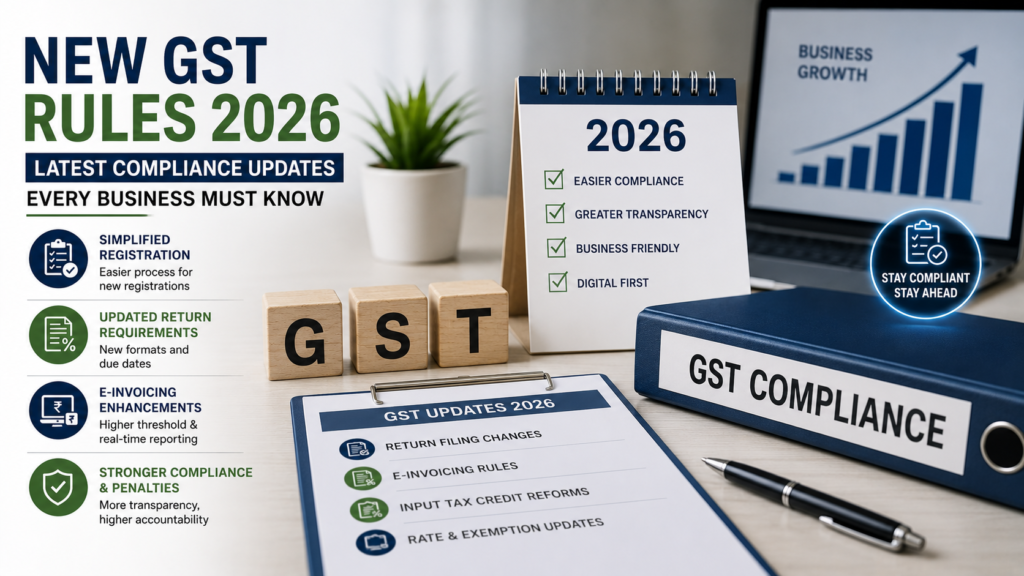
New GST Rules 2026: Latest Compliance Updates Every Business Must Know
TL;DR GST compliance continues to evolve as tax administration becomes more digital and data-driven. Businesses should stay updated with applicable GST provisions, maintain accurate documentation, reconcile returns regularly, and strengthen internal controls to minimize compliance risks. This guide highlights the key compliance areas businesses should monitor in 2026 and explains how proactive GST management supports long-term business growth. Why Keeping Up with GST Rules Matters The Goods and Services Tax (GST) has transformed indirect taxation in India by creating a unified tax system across goods and services. As the business environment evolves, compliance requirements continue to be refined through amendments, notifications, procedural improvements, and increased use of technology. Today’s GST ecosystem relies heavily on digital reporting, automated reconciliations, analytics, and data matching. Businesses that fail to keep their records updated may face delayed Input Tax Credit (ITC), notices, interest, penalties, or unnecessary compliance challenges. Rather than viewing GST as a routine filing obligation, businesses should consider it an essential part of sound financial governance. Why Businesses Should Monitor GST Updates Regularly GST rules may change over time due to: Government notifications CBIC circulars Judicial decisions Process improvements Technology enhancements Return filing updates Compliance simplification initiatives Keeping track of these developments helps businesses remain compliant and avoid operational disruptions. Key GST Compliance Areas Businesses Should Focus on in 2026 Instead of reacting to notices after they arrive, businesses should strengthen the following compliance practices throughout the year. Accurate GST Registration Information Businesses should periodically review their GST registration details to ensure information such as business address, bank account, contact details, and authorized signatory remains accurate and updated. Failure to maintain current information may create difficulties during departmental verification or communication. Timely GST Return Filing One of the most important compliance responsibilities is filing GST returns within the prescribed due dates. Timely filing helps businesses: Avoid late fees. Reduce interest liabilities. Maintain compliance ratings. Facilitate smoother Input Tax Credit claims. Build credibility with customers and vendors. Maintaining a compliance calendar can significantly reduce the risk of missed deadlines. Regular Reconciliation of GST Records Businesses should frequently reconcile: Sales registers Purchase registers GST returns E-invoices (where applicable) Books of accounts Vendor invoices Regular reconciliation helps identify discrepancies early and minimizes future compliance issues. Proper Input Tax Credit (ITC) Management Input Tax Credit is one of the most valuable benefits available under GST. To maximize eligible ITC, businesses should: Maintain valid tax invoices. Verify supplier compliance. Match purchase records. Monitor vendor return filings. Maintain complete documentation. Effective ITC management improves working capital and reduces tax costs. Strong Invoice Management Invoices remain the foundation of GST compliance. Businesses should ensure that invoices contain all mandatory particulars and are issued accurately and on time. Maintaining organized digital records also supports smoother audits and reconciliations. Digital Record Keeping As tax administration becomes increasingly technology-driven, maintaining digital accounting records has become essential. Businesses should preserve: Purchase invoices Sales invoices Debit notes Credit notes E-way bills Bank statements GST returns Payment records Vendor contracts Cloud-based accounting systems can improve record management while simplifying future audits. Vendor Compliance Monitoring A business’s GST compliance is influenced not only by its own practices but also by the compliance behavior of its suppliers. Regularly reviewing vendor GST status, return filing history, and invoice accuracy helps reduce Input Tax Credit disputes and strengthens overall compliance. How New GST Compliance Practices Impact Small Businesses Small businesses often have limited accounting resources, making proactive compliance even more important. Improved GST management can help businesses: Reduce avoidable penalties. Improve cash flow through timely ITC. Build stronger relationships with vendors. Increase confidence during bank loan applications. Prepare for departmental audits. Improve financial reporting. Rather than viewing GST as a burden, businesses should integrate compliance into their everyday accounting processes. Best Practices for GST Compliance in 2026 To remain compliant and avoid unnecessary complications, businesses should adopt the following practices: Maintain updated books of accounts. Reconcile GST records every month. File returns within due dates. Preserve supporting documentation. Verify supplier GST compliance. Review Input Tax Credit eligibility regularly. Conduct periodic internal compliance reviews. Stay informed about official GST notifications. Seek professional advice whenever complex issues arise. Following these practices creates a strong compliance framework and reduces long-term business risks. Common GST Compliance Mistakes Businesses Should Avoid Even businesses with experienced accounting teams can make GST compliance mistakes that lead to notices, blocked Input Tax Credit (ITC), interest liabilities, or penalties. Identifying these issues early can save both time and money. Some of the most common mistakes include: Filing GST returns after the due date. Claiming ineligible Input Tax Credit. Failing to reconcile books of accounts with GST returns. Incorrect GST classification or tax rates. Issuing invoices with missing or inaccurate details. Ignoring vendor compliance before claiming ITC. Delayed payment of GST liability. Not maintaining proper accounting records and supporting documents. Failing to update GST registration details after business changes. Overlooking departmental notices or communications. Regular internal reviews and professional guidance help businesses minimize these risks and maintain smooth compliance. How a Chartered Accountant Can Help with GST Compliance GST regulations continue to evolve, making professional support increasingly valuable for businesses of every size. A Chartered Accountant not only ensures compliance but also helps improve tax efficiency and reduce operational risks. A professional CA can assist with: GST Registration and amendments. GST Return Filing. Input Tax Credit reconciliation. GST compliance reviews. GST audit preparation. E-invoicing guidance. E-way bill compliance. GST litigation support. Departmental notice responses. Monthly GST reconciliation. Business advisory on indirect taxation. Compliance planning for business expansion. Professional assistance allows business owners to focus on growth while ensuring that GST obligations are managed accurately and on time. Why Choose Junaid Khan & Co., Chartered Accountants in Bhopal? Managing GST compliance requires technical expertise, timely reporting, and continuous monitoring of regulatory developments. Businesses benefit from working with professionals who understand both the legal framework and the practical challenges of day-to-day operations. Junaid Khan & Co., Chartered Accountants in Bhopal offers end-to-end GST advisory and compliance solutions tailored to startups,