

Internal Audit vs Statutory Audit: Which One Does Your Business Need?
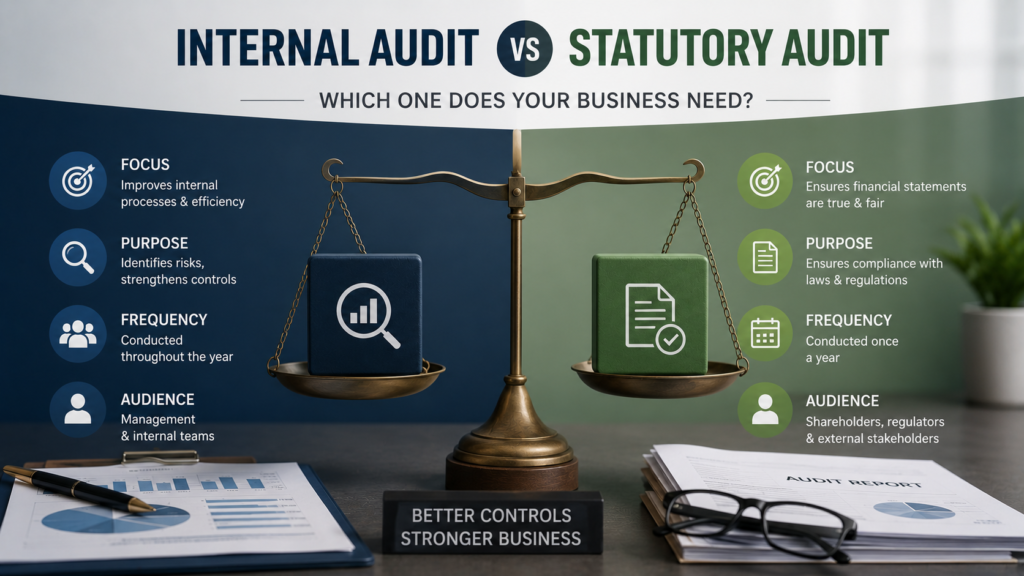
TL;DR Internal audits help businesses improve operations, strengthen internal controls, and identify risks before they become costly problems. Statutory audits are legally mandated for eligible entities to ensure financial statements present a true and fair view. While internal audits focus on improving business performance, statutory audits focus on regulatory compliance and financial reporting. Many growing businesses benefit from both. Understanding Business Audits As businesses expand, financial transactions become more complex, compliance obligations increase, and operational risks multiply. Conducting regular audits is one of the most effective ways to maintain financial discipline, improve transparency, and build stakeholder confidence. However, many entrepreneurs confuse internal audits with statutory audits, assuming they serve the same purpose. Although both involve examining financial records and business processes, their objectives, scope, frequency, and legal requirements differ significantly. Understanding these differences enables business owners to select the right audit approach and strengthen their overall financial governance. What is an Internal Audit? An internal audit is an independent evaluation of a company’s internal controls, financial processes, operational efficiency, and risk management systems. Unlike statutory audits, internal audits are primarily conducted for management. Their objective is not merely to verify financial statements but to identify weaknesses, improve efficiency, and recommend corrective actions. Internal audits typically evaluate: Accounting systems Internal financial controls Operational procedures Inventory management Procurement processes Revenue recognition Expense controls Payroll systems IT security controls Regulatory compliance Fraud prevention mechanisms Risk management practices Internal audits provide management with practical recommendations that enhance profitability and reduce business risks. What is a Statutory Audit? A statutory audit is an audit mandated by law under applicable legislation such as the Companies Act, Income Tax Act, or other regulatory frameworks. Its primary objective is to determine whether a company’s financial statements accurately reflect its financial position and comply with applicable accounting standards and legal requirements. Statutory audits are conducted by independent Chartered Accountants appointed according to statutory provisions. The audit report is typically submitted to: Shareholders Banks Investors Government authorities Regulatory agencies Financial institutions A statutory audit enhances credibility and assures stakeholders that the financial statements are reliable. Internal Audit vs Statutory Audit: Key Differences Parameter Internal Audit Statutory Audit Purpose Improve operations and controls Verify financial statements Mandatory Depends on applicable laws and business needs Mandatory for eligible entities under law Conducted By Internal audit team or external professionals Independent Chartered Accountant Primary Users Management Shareholders, regulators, lenders Frequency Monthly, quarterly, half-yearly, or annual Generally annual Focus Processes, risks, controls, efficiency Financial statements and compliance Reporting Management reports Statutory audit report Value Addition Operational improvement Regulatory compliance and financial credibility Benefits of Internal Audit An effective internal audit contributes significantly to operational excellence. Better Risk Management Internal audits identify potential financial, operational, and compliance risks before they escalate. Stronger Internal Controls Reviewing approval workflows, payment systems, inventory controls, and financial processes reduces opportunities for errors and fraud. Fraud Detection Regular audits help uncover irregular transactions, unauthorized activities, and control weaknesses at an early stage. Improved Operational Efficiency Businesses often discover redundant processes, unnecessary costs, and workflow inefficiencies that can be optimized. Enhanced Compliance Internal audits ensure adherence to GST, Income Tax, Companies Act provisions, labor laws, and internal company policies. Better Decision-Making Management receives detailed reports with actionable recommendations supported by accurate financial and operational data. Benefits of Statutory Audit Statutory audits provide assurance to stakeholders and strengthen the company’s reputation. Increased Financial Credibility Audited financial statements inspire confidence among banks, investors, suppliers, and customers. Legal Compliance Statutory audits help businesses fulfill mandatory obligations under applicable laws and avoid penalties for non-compliance. Easier Access to Finance Financial institutions often require audited statements when evaluating loan applications or credit facilities. Greater Investor Confidence Investors prefer businesses with independently audited financial statements, as they indicate transparency and sound governance. Accurate Financial Reporting Statutory audits help detect material misstatements and improve the reliability of financial information. Which Businesses Need Internal Audit? Internal audits are particularly valuable for organizations with growing operations or increasing complexity. Businesses that commonly benefit include: Growing startups Manufacturing companies Trading businesses Retail chains Construction companies Healthcare organizations Educational institutions Logistics companies IT and software firms Companies with multiple branches Businesses handling large inventories Organizations seeking operational efficiency Even where not legally required, internal audits can significantly improve governance and reduce long-term risks. Which Audit Is Right for Your Business? Choosing between an internal audit and a statutory audit depends on your business size, legal obligations, industry, and long-term objectives. While many companies assume they only need the audit mandated by law, proactive businesses often benefit from both. Here’s a simple comparison: Business Situation Internal Audit Statutory Audit Startup looking to improve financial processes ✅ Recommended ❌ Not always mandatory SME wanting stronger internal controls ✅ Highly Recommended Depends on turnover and legal requirements Company requiring statutory compliance Optional ✅ Mandatory Business preparing for funding or investors ✅ Strongly Recommended Usually Required Company facing rapid expansion ✅ Essential Depends on legal thresholds Government contract bidding Recommended Often Mandatory Manufacturing business with inventory risks ✅ Highly Beneficial Mandatory if applicable Family-owned business seeking fraud prevention ✅ Recommended Limited fraud detection scope Can a Business Conduct Both Internal and Statutory Audits? Absolutely. Many successful businesses conduct both because they serve completely different purposes. The internal audit helps management continuously improve business performance throughout the year, while the statutory audit independently verifies financial statements at the end of the financial year. Using both provides several advantages: Better compliance management Reduced financial risks Faster audit completion Higher investor confidence Improved corporate governance Stronger fraud prevention Better tax planning Increased operational efficiency Common Audit Mistakes Businesses Should Avoid Businesses often create unnecessary financial and compliance risks by making avoidable mistakes. Some of the most common include: Waiting until the financial year-end to prepare records Maintaining incomplete accounting books Ignoring GST reconciliation Delaying TDS payments Poor inventory documentation Lack of supporting invoices Weak approval systems Mixing personal and business expensesa Ignoring internal financial controls Not consulting experienced Chartered Accountants before audits Avoiding these mistakes can significantly reduce