

Common Accounting Mistakes That Cost Small Businesses Thousands in Taxes
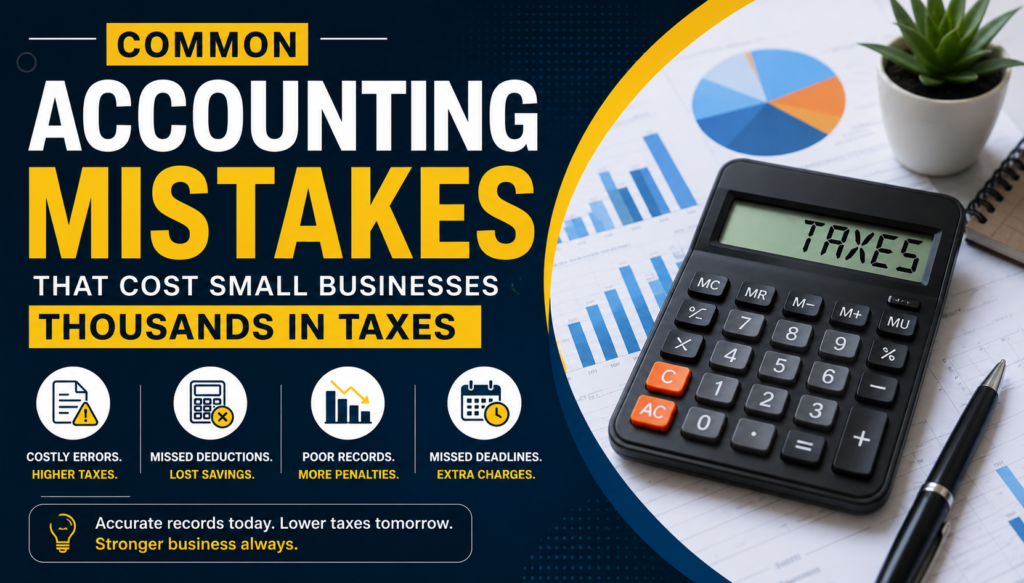
TL;DR Many small businesses lose significant amounts of money every year—not because of poor sales, but because of poor accounting. The most expensive accounting mistakes include: ✔ Mixing personal and business finances ✔ Missing deductible expenses ✔ Poor bookkeeping ✔ Incorrect GST records ✔ Delayed financial reporting ✔ Poor cash flow monitoring ✔ Weak tax planning ✔ Lack of professional accounting oversight Avoiding these mistakes can improve profitability, reduce tax liability, and strengthen long-term business growth. Why Accounting Matters More Than Most Business Owners Realize Many entrepreneurs focus heavily on sales, marketing, and operations. However, accounting is often the foundation that determines whether a business grows profitably or struggles financially. Good accounting helps business owners: Understand profitability Manage taxes efficiently Monitor cash flow Make informed decisions Avoid penalties Secure loans and investments Scale operations confidently Unfortunately, many small businesses treat accounting as a year-end activity rather than an ongoing business function. This mistake can be extremely costly. The Hidden Cost of Poor Accounting Accounting errors rarely create immediate problems. Instead, they gradually affect: Tax liability Business profitability Compliance status Cash flow Financial planning For example, a business that fails to record deductible expenses throughout the year may pay significantly more tax than necessary. Similarly, inaccurate financial records can trigger GST mismatches, compliance notices, and unnecessary scrutiny. The true cost often extends far beyond accounting fees. 1. Mixing Personal and Business Finances This is one of the most common mistakes among small business owners. Many entrepreneurs use the same bank account for: Business purchases Personal expenses Family spending Vendor payments This creates confusion and makes accurate accounting nearly impossible. Consequences Inaccurate financial statements Lost deductible expenses Tax filing complications Audit risks Best Practice Maintain separate: Bank accounts Credit cards Expense records for business and personal use. 2. Ignoring Regular Bookkeeping Many businesses postpone bookkeeping until tax season. Unfortunately, delayed bookkeeping often results in: Missing transactions Incorrect records Forgotten expenses Financial confusion Example A retailer with hundreds of monthly transactions may struggle to reconstruct records months later. The result is inaccurate reporting and lost tax deductions. Best Practice Update accounting records weekly or monthly. Consistent bookkeeping improves financial accuracy and decision-making. 3. Failing to Record Business Expenses Properly Every legitimate business expense should be documented appropriately. Commonly missed expenses include: Travel costs Professional subscriptions Office supplies Software expenses Communication costs Business meals Training expenses Impact When expenses are not recorded properly: Taxable income appears higher Tax liability increases Profit figures become misleading This is one of the easiest ways businesses unintentionally overpay taxes. 4. Poor GST Record Management GST compliance depends heavily on accurate accounting records. Many businesses make mistakes involving: Tax invoices GST classifications Input tax records Filing reconciliations Consequences Poor GST accounting can lead to: Input Tax Credit losses Compliance notices Interest liabilities Penalties Best Practice Reconcile GST records regularly and maintain accurate supporting documentation. 5. Not Reconciling Bank Accounts Bank reconciliation ensures accounting records match actual bank transactions. Without reconciliation: Duplicate entries go unnoticed Missing transactions remain hidden Fraud risks increase Cash balances become unreliable Recommended Frequency Monthly reconciliation is generally considered a minimum best practice. 6. Delaying Accounting Entries Many business owners record transactions weeks or months after they occur. Delayed accounting creates: Inaccurate reports Decision-making problems Tax planning difficulties Compliance risks Real-time accounting provides a far clearer picture of business performance. 7. Ignoring Cash Flow Management Profitability and cash flow are not the same thing. A business may appear profitable on paper while struggling to pay suppliers and employees. Common Cash Flow Mistakes Excessive credit sales Delayed collections Poor inventory management Lack of forecasting Best Practice Monitor: Incoming cash Outgoing cash Outstanding receivables Upcoming liabilities on a regular basis. 8. Poor Tax Planning Throughout the Year Many businesses only think about taxes when filing returns. This reactive approach limits tax-saving opportunities. Effective tax planning should occur throughout the financial year. Benefits Lower tax liability Better cash flow management Improved compliance Reduced year-end stress Tax planning is most effective when integrated into routine financial management. 9. Inaccurate Inventory Accounting For businesses dealing with physical products, inventory accounting directly affects profitability and taxation. Common mistakes include: Incorrect stock counts Outdated inventory records Inventory valuation errors Unrecorded losses Impact Inventory errors can distort: Profit calculations Taxable income Financial statements Accurate inventory controls are essential. 10. Trying to Manage Everything Without Professional Support Many business owners attempt to handle accounting themselves despite limited expertise. While this may appear cost-effective initially, it often becomes expensive later. Professional accountants can help identify: Tax-saving opportunities Compliance risks Financial inefficiencies Reporting errors Their expertise often saves businesses significantly more than the cost of professional services. How Accounting Errors Increase Tax Liability Many accounting mistakes directly affect tax outcomes. Accounting Error Potential Impact Missing expenses Higher taxable income Poor bookkeeping Incorrect tax reporting GST errors Penalties and interest Inventory mistakes Misstated profits Delayed accounting Missed tax planning opportunities Incomplete records Lost deductions The cumulative financial impact can be substantial over time. How to Build an Error-Free Accounting System Business owners can reduce accounting risks by implementing a structured process. Step 1 Maintain separate financial accounts. Step 2 Use accounting software. Step 3 Update records consistently. Step 4 Perform monthly reconciliations. Step 5 Track expenses systematically. Step 6 Review GST compliance regularly. Step 7 Conduct quarterly financial reviews. Step 8 Work with qualified accounting professionals. These steps create stronger financial controls and better decision-making capabilities. Benefits of Professional Accounting Services Professional accounting support provides advantages beyond compliance. Better Tax Efficiency Proper accounting helps identify legitimate deductions and planning opportunities. Improved Cash Flow Accurate financial information supports better operational decisions. Stronger Compliance Professional oversight reduces the risk of notices and penalties. Better Business Growth Reliable financial data enables confident expansion and investment decisions. Reduced Stress Business owners can focus on growth while professionals manage financial compliance. Conclusion Accounting mistakes are not merely administrative errors—they can directly affect profitability, tax liability, compliance, and long-term business success. Small businesses that neglect bookkeeping, fail to track expenses, ignore reconciliations, or