

The Real Cost of Running a Business in India: Registration, GST, Tax, Accounting & Hidden Expenses
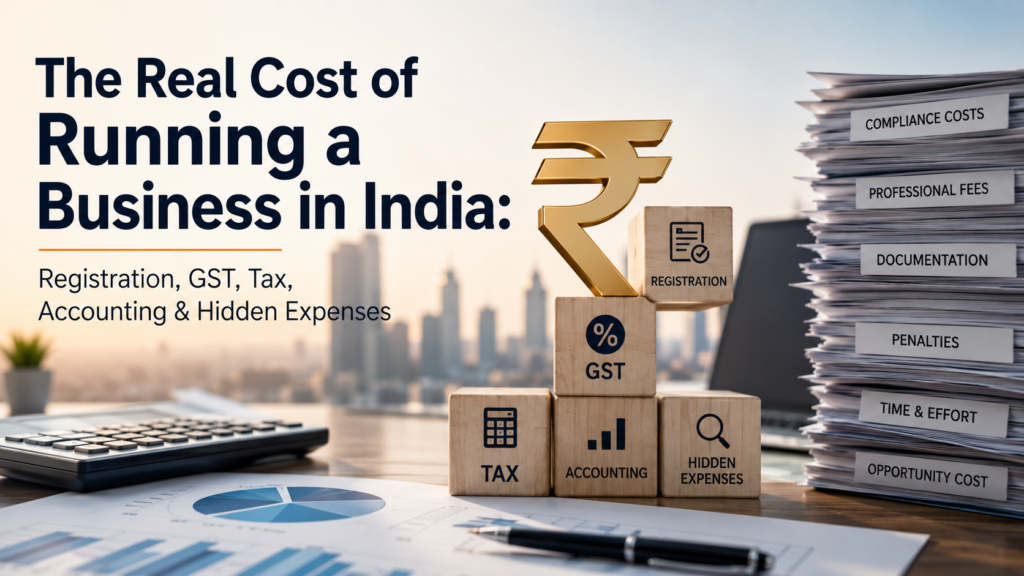
TL;DR Many businesses in India face financial challenges not because of insufficient revenue, but because key costs are underestimated during planning and growth stages. Key cost drivers include: Business registration and entity structure decisions GST and tax compliance obligations Accounting and bookkeeping systems Operational overheads and administrative expenses Hidden financial inefficiencies and cash flow gaps Understanding the complete cost structure of a business is essential for sustainable growth and long-term stability. Why Business Costs Are Often Miscalculated Many entrepreneurs focus heavily on revenue opportunities while underestimating the financial commitments required to operate and grow a business. A business may appear profitable on paper but still experience financial pressure due to: Delayed receivables Compliance-related obligations Limited financial visibility Untracked operational expenses Inefficient cash flow management One common challenge businesses face is inadequate visibility into spending patterns and financial obligations. The Core Cost Components of Running a Business in India 1. Business Registration Costs and Structural Setup Every business begins with registration, but the chosen business structure can influence long-term compliance requirements, taxation, and operational flexibility. Key elements influencing cost structure include: Entity type selection Documentation and registration requirements Legal and regulatory formalities Initial compliance setup Common business structures include: Proprietorship (simplified structure for small businesses) Partnership Firm (shared ownership model) Limited Liability Partnership (LLP) Private Limited Company Selecting an unsuitable business structure may result in: Additional compliance requirements Increased administrative effort Operational limitations as the business grows 2. GST & Tax Compliance Costs Tax compliance and related obligations are often overlooked during business planning. Key components may include: GST registration and return filing Input tax credit reconciliation TDS compliance and reporting Advance tax planning Annual income tax filings Business Impact Areas Working capital management Cash flow timing Administrative workload Compliance-related risks The complexity of GST compliance may increase for businesses involved in: Multi-state operations Ecommerce activities High transaction volumes Multiple business verticals 3. Accounting & Bookkeeping Systems Accounting serves as the financial foundation of a business and supports informed decision-making. Core elements include: Transaction recording systems Expense classification and tracking Invoice management Bank reconciliations Periodic financial reporting Without structured accounting processes: Expense visibility may be reduced Profitability analysis becomes difficult Financial decision-making may become reactive Well-maintained accounting records can help improve financial clarity, compliance readiness, and operational control. 4. Legal & Statutory Compliance Businesses operate within various regulatory frameworks that require periodic compliance. Examples include: ROC filings for companies and LLPs Annual returns Labor law compliance requirements Industry-specific registrations and licenses Audit-related documentation Failure to comply with applicable regulations may result in: Administrative challenges Regulatory notices Operational disruptions 5. Operational Overheads Operational expenses extend beyond direct revenue-generating activities. Common overhead costs include: Employee-related expenses Office and infrastructure costs Software and technology subscriptions Vendor and service provider payments Logistics and distribution expenses These costs often evolve as the business expands and therefore require regular monitoring. Hidden Costs Most Founders Miss Many business owners focus on visible expenses while overlooking indirect costs that can affect profitability. Common Hidden Cost Categories Inefficient vendor agreements Delayed receivables Manual processing errors Duplicate operational activities Poor inventory control Limited tax planning Rework caused by inaccurate records Although these costs may not always appear as direct expenses, they can influence overall financial performance. Monthly vs Annual Financial Burden Breakdown Category Frequency Impact Area Tax filings Monthly / Quarterly Compliance management Accounting updates Monthly Financial reporting GST reconciliation Monthly Cash flow accuracy ROC compliance Annual Regulatory requirements Operational expenses Ongoing Profitability and growth Why Businesses Experience Cash Flow Pressure Cash flow challenges are often linked to financial structure and timing rather than profitability alone. Common reasons include: Delayed customer payments Tax payment schedules Untracked expenses Inventory holding costs Inadequate forecasting Even profitable businesses may experience liquidity constraints when cash inflows and outflows are not properly aligned. Financial Planning Mistakes in Early-Stage Businesses Some common financial planning challenges include: Lack of cost forecasting Ignoring compliance timelines Mixing personal and business finances Irregular financial reviews Absence of accounting discipline These issues may accumulate over time and become more visible as the business scales. How Accounting Systems Reduce Cost Leakage Structured accounting systems support stronger financial management by: Recording transactions accurately Improving expense visibility Supporting tax compliance Enhancing cash flow planning Strengthening internal controls Greater financial clarity can contribute to better business decisions and improved resource allocation. Realistic Cost Structure Framework for SMEs A stable business typically allocates resources across: Compliance and regulatory obligations Accounting and financial management systems Operational infrastructure Taxation responsibilities Growth and expansion initiatives The objective is not to eliminate costs entirely but to optimize resources through effective planning and monitoring. Conclusion The cost of running a business in India extends beyond registration expenses. It involves ongoing compliance obligations, taxation requirements, accounting systems, operational overheads, and financial management processes. Businesses that do not establish structured financial systems at an early stage may encounter: Cash flow challenges Compliance-related pressure Growth constraints Limited financial visibility A well-organized financial framework can help businesses improve clarity, stability, and long-term scalability. Frequently Asked Questions 1. What is the real cost of running a business in India? The overall cost includes registration expenses, taxation compliance, accounting systems, operational overheads, technology costs, and various administrative requirements. 2. What are hidden business expenses? Hidden expenses may include delayed receivables, inefficient processes, bookkeeping errors, compliance lapses, and untracked operational costs. 3. Why do businesses underestimate costs? Many businesses focus primarily on revenue opportunities and may not fully account for compliance obligations, operational overheads, and financial management requirements. 4. Is GST a major cost for small businesses? GST itself is a tax mechanism, but compliance requirements associated with GST can influence administrative workload, cash flow planning, and financial processes. 5. What is the biggest expense in running a business? Major expenses vary by industry and business model. However, operational, employee-related, compliance, and infrastructure costs often represent significant ongoing expenditures. 6. How can businesses reduce financial pressure? Businesses can improve financial control through structured accounting systems, regular financial reviews, effective compliance management, and proper cash flow planning. 7. Do