
Expert Insights: Why Most New Businesses Fail During Registration & Compliance Stage
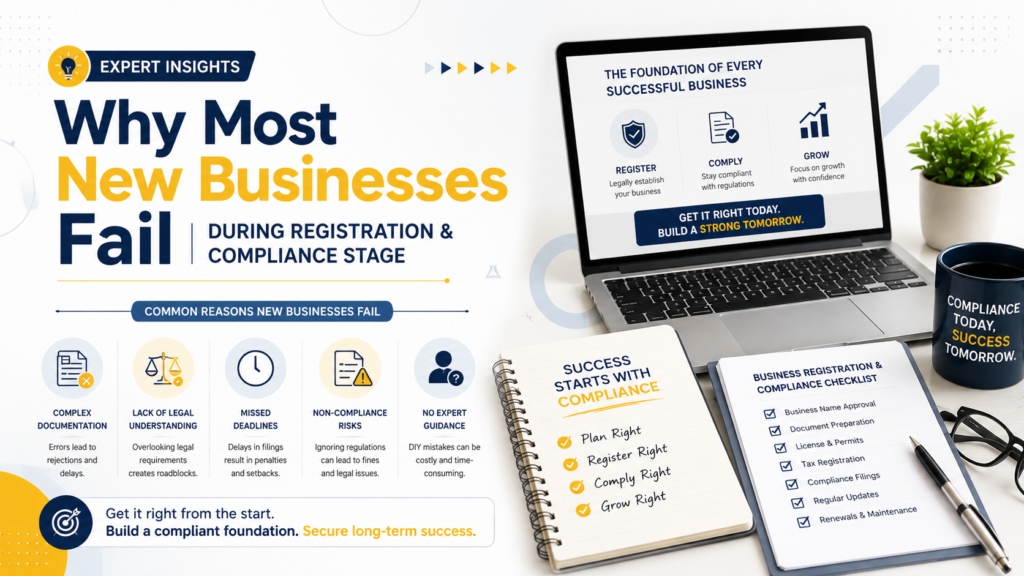
TL;DR Many startups and new businesses fail before scaling because they underestimate the importance of registration, compliance, taxation, and financial structuring. The most common reasons include: Choosing the wrong business structure Missing compliance deadlines GST and tax filing errors Poor bookkeeping systems Inadequate legal documentation Lack of professional advisory support Businesses that establish proper compliance systems early improve operational stability, investor confidence, and long-term scalability. Why the Registration & Compliance Stage Is Critical Most entrepreneurs focus heavily on branding, product development, and customer acquisition during the early stages of business. However, many ignore the legal and compliance foundation that supports sustainable growth. A business may generate revenue initially, but weak compliance systems eventually create operational roadblocks such as: Government notices Banking restrictions Funding difficulties Vendor trust issues Tax penalties Legal complications The registration and compliance stage determines whether a business is structurally prepared for long-term operations. Businesses that neglect this phase often struggle within the first few years. The Hidden Risks New Businesses Ignore New founders frequently assume that registration is simply paperwork. In reality, incorporation is the beginning of ongoing legal, tax, and financial responsibilities. Hidden Risks Include: Incorrect tax classification Improper GST registration Delayed ROC filings Unstructured accounting Lack of statutory records Incomplete shareholder agreements Regulatory non-compliance These issues compound over time and become expensive operational problems later. Most Common Registration Mistakes Founders Make 1. Choosing the Wrong Business Structure One of the earliest and most damaging mistakes is selecting an unsuitable business structure. Many founders register without understanding the long-term impact of: Taxation Compliance obligations Liability protection Funding capability Scalability Common Structures in India Structure Suitable For Sole Proprietorship Freelancers & small local businesses Partnership Firm Small jointly operated businesses LLP Professional services & SMEs Private Limited Company Scalable startups seeking investment Choosing the wrong structure can create: Tax inefficiencies Limited funding opportunities Operational restrictions Compliance confusion 2. Incomplete Documentation During Registration Documentation errors delay approvals and create legal inconsistencies. Common documentation mistakes include: Incorrect address proofs Mismatched PAN details Improper MOA/AOA drafting Missing digital signatures Director KYC issues Poor documentation can delay: Bank account opening GST registration Vendor onboarding Funding processes Founders should maintain organized documentation from day one. 3. Ignoring Industry-Specific Licenses Many businesses assume incorporation alone is sufficient. However, depending on the business type, additional licenses may be required. Examples include: GST registration Shops & Establishment License Import Export Code (IEC) FSSAI registration Professional Tax registration MSME/Udyam registration Operating without required approvals increases compliance risk significantly. 4. Poor Financial Planning Before Launch Many startups begin operations without: Accounting systems Cash flow forecasting Expense categorization Tax planning Compliance budgeting This creates immediate operational instability. According to startup ecosystem reports, cash flow mismanagement remains one of the top reasons early-stage businesses fail. Financial discipline should begin before the first sale. Major Compliance Mistakes That Hurt Startups 1. GST Compliance Errors GST remains one of the biggest compliance challenges for new businesses. Common mistakes include: Delayed GST registration Incorrect invoice formatting ITC mismatches Late filing Vendor reconciliation failures Consequences may include: Interest liabilities Penalties Notice issuance Working capital disruption Businesses should implement structured GST tracking systems early. 2. Ignoring TDS & Payroll Compliance Businesses hiring employees or contractors must understand TDS obligations. Common issues include: Incorrect deductions Delayed deposits Filing errors Missing payroll documentation This creates unnecessary scrutiny and financial exposure. Payroll compliance becomes increasingly important as businesses scale. 3. Delayed ROC Filings Private Limited Companies and LLPs have ongoing filing obligations. Missed ROC deadlines affect: Company status Director compliance records Future fundraising Corporate credibility Founders often ignore ROC obligations until notices arrive. Compliance calendars help avoid this problem. 4. Weak Accounting & Bookkeeping Systems Many startups operate for months without organized accounting. Common issues: Untracked expenses Mixed personal and business transactions No receivable tracking Missing invoices Cash flow confusion Weak bookkeeping creates inaccurate financial reporting. This affects: Tax filings Investor due diligence Loan eligibility Business valuation Why Founders Underestimate Compliance Many entrepreneurs view compliance as a secondary administrative activity. In reality, compliance directly impacts: Business continuity Funding readiness Operational stability Legal protection Financial transparency Startups with poor compliance often appear risky to: Investors Banks Strategic partners Enterprise clients Compliance is not merely about avoiding penalties—it builds business credibility. Registration vs Operational Readiness Registration alone does not make a business operationally ready. A scalable business also requires: Accounting systems Financial controls Vendor contracts Tax tracking Payroll workflows Documentation management Founders should think beyond incorporation certificates. Operational readiness determines whether a company can grow sustainably. Essential Compliance Systems Every Startup Needs 1. Compliance Calendar Track: GST filings ROC filings TDS due dates Payroll compliance Annual returns 2. Cloud Accounting System Use structured accounting platforms for: Invoicing Reconciliation Reporting Expense tracking 3. Document Management System Maintain: Tax filings Registration certificates Agreements Financial records 4. Internal Financial Controls Create approval systems for: Expenses Vendor payments Payroll Reimbursements Startup Compliance Checklist Area Key Requirement Business Registration Proper structure selection GST Timely registration & filing Accounting Organized bookkeeping ROC Filings Annual compliance Payroll TDS & statutory deductions Documentation Digital records management Banking Separate business accounts How Professional Guidance Reduces Risk Professional advisory support helps founders: Choose the right structure Avoid legal mistakes Maintain tax compliance Build scalable accounting systems Improve operational readiness Experienced chartered accountants and compliance advisors can identify risks before they become expensive business problems. For many startups, professional guidance during the initial stage prevents years of compliance complications later. Conclusion Most new businesses do not fail because their ideas are weak. They fail because operational foundations are poorly structured from the beginning. Registration and compliance are not merely formalities—they establish the legal, financial, and operational backbone of a company. Founders who prioritize: Correct registration Strong accounting systems Timely compliance Structured documentation Professional guidance position their businesses for sustainable growth and long-term stability. Businesses seeking structured registration, compliance management, accounting support, and startup advisory can benefit from expert guidance from firms like Junaid Khan & Co to build a stronger operational foundation from the beginning. 6. FAQ SECTION 1.