

Accounting & Bookkeeping for Growing Businesses: Systems Every Founder Should Set Up Early
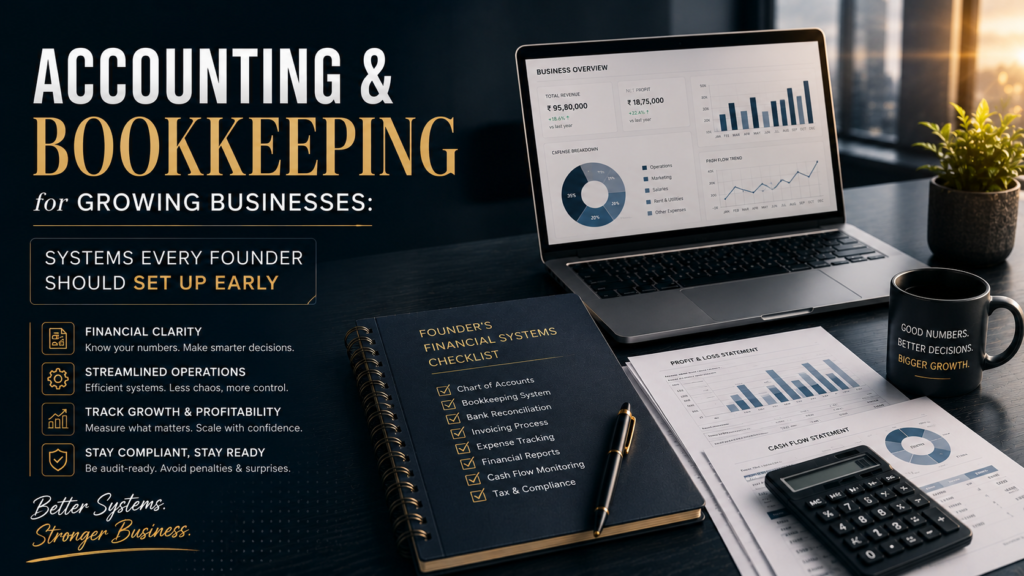
TL;DR Growing businesses often fail financially not because of poor sales, but because of weak accounting systems. Founders who establish proper bookkeeping workflows early gain better cash flow visibility, easier tax compliance, stronger investor confidence, and scalable operations. This guide explains: The accounting systems every growing business needs Common bookkeeping mistakes to avoid Financial reports founders should monitor How automation improves accuracy and efficiency When outsourcing accounting becomes necessary Why Early Accounting Systems Matter Most founders focus heavily on sales, hiring, and operations during the growth phase. Accounting becomes an afterthought until problems start appearing: GST mismatches Cash flow shortages Vendor disputes Missed tax deadlines Unclear profitability Investor due diligence issues Without structured bookkeeping systems, financial data becomes unreliable. That directly impacts strategic decisions. According to multiple SME finance studies, businesses with organized financial reporting are significantly more likely to maintain healthy cash flow and secure external funding. Strong accounting systems help businesses: Track profitability accurately Maintain compliance Forecast growth Improve operational efficiency Build lender and investor trust The Real Cost of Poor Bookkeeping Poor bookkeeping creates hidden financial risks that compound over time. Problem Business Impact Missing expense records Incorrect profit calculation Delayed invoicing Slower cash inflow GST reconciliation errors Notices and penalties No receivable tracking Bad debts Weak payroll records Compliance disputes Manual spreadsheets Human errors and duplication Founders often underestimate how quickly financial disorganization affects business growth. A business can grow revenue while simultaneously losing financial control. Core Accounting Systems Every Founder Needs 1. Separate Business and Personal Finances One of the earliest systems founders should establish is complete separation between business and personal transactions. This includes: Dedicated business bank accounts Separate credit/debit cards Structured reimbursement policies Clear owner withdrawal tracking Mixing personal and business expenses creates: Tax complications Audit risks Reporting inaccuracies Cash flow confusion Clean financial separation improves bookkeeping accuracy immediately. 2. Implement Cloud Accounting Software Early Manual bookkeeping becomes unsustainable once transaction volume increases. Cloud accounting software helps automate: Invoicing Expense categorization Bank reconciliation Financial reporting GST calculations Benefits include: Real-time financial visibility Reduced human errors Faster reporting Easier collaboration with accountants Secure cloud backups Founders should prioritize systems that integrate with: Banking GST filing Payroll Ecommerce platforms CRM tools 3. Build an Expense Management Workflow Uncontrolled expense tracking is one of the most common operational weaknesses in growing businesses. An effective workflow should include: Digital expense submissions Approval hierarchy Receipt storage Vendor categorization Monthly reconciliation Recommended categories: Marketing Salaries Travel Software subscriptions Vendor payments Operational expenses This improves budgeting accuracy and tax documentation readiness. 4. Set Up Invoice & Receivable Tracking Revenue means little if collections are delayed. Many businesses struggle because they track sales but fail to monitor receivables properly. Every founder should implement: Standardized invoicing Payment due-date tracking Automated reminders Customer ledger reconciliation Ageing analysis reports Aging reports help identify: Chronic late payers Cash flow risks Collection inefficiencies Strong receivable management improves liquidity significantly. 5. Create GST & Tax Compliance Tracking Systems Compliance becomes more complex as businesses scale. Growing businesses must track: GST input/output reconciliation TDS deductions Vendor compliance Filing deadlines Advance tax obligations Missing compliance deadlines can result in: Notices Interest liabilities Penalties ITC mismatches A structured compliance calendar reduces these risks. 6. Establish Payroll & Employee Payment Systems Payroll errors damage employee trust and create compliance exposure. Founders should implement: Salary processing workflows Leave tracking PF/ESI calculations Reimbursement systems Payroll documentation As teams grow, payroll complexity increases rapidly. Automated payroll systems improve: Accuracy Timeliness Statutory compliance Record maintenance 7. Review Monthly Financial Reports Many founders only review finances during tax season. That creates delayed decision-making. Businesses should review monthly: Report Why It Matters Profit & Loss Statement Tracks profitability Cash Flow Statement Monitors liquidity Balance Sheet Evaluates financial position Receivables Report Tracks collections Expense Summary Controls spending Monthly reviews help founders: Detect financial leaks Improve forecasting Optimize margins Make data-driven decisions 8. Maintain a Proper Document Management System Financial documentation becomes critical during: Tax assessments Funding rounds Audits Vendor disputes Due diligence Businesses should maintain: Digital invoices Contracts Tax filings Payroll records Bank statements Cloud storage with organized folders improves accessibility and audit readiness. Essential Financial Reports Founders Should Review Founders do not need to become accountants, but they must understand core business metrics. Key Metrics to Monitor Gross profit margin Net profit margin Burn rate Cash runway Accounts receivable turnover Operating expenses ratio These indicators reveal operational efficiency and growth sustainability. Common Bookkeeping Mistakes Growing Businesses Make Delaying Accounting Until Year-End This causes: Backlogs Errors Tax stress Inaccurate reports Over-Reliance on Excel Sheets Spreadsheets become risky during scaling due to: Manual errors Version conflicts Lack of automation Ignoring Cash Flow Profitability does not guarantee healthy cash flow. Many businesses fail because: Collections are delayed Expenses rise too quickly Inventory locks working capital Poor Vendor Documentation Missing invoices and contracts create: GST input issues Audit risks Payment disputes Automation vs Manual Accounting Automation significantly improves operational efficiency. Manual Systems Best for: Very early-stage businesses Minimal transactions Automated Systems Best for: Scaling companies Multi-location operations Ecommerce businesses Service firms with recurring invoicing Automation improves: Accuracy Speed Compliance tracking Reporting consistency However, automation still requires professional oversight. When to Outsource Accounting & Bookkeeping Many founders attempt to manage bookkeeping internally for too long. Outsourcing becomes beneficial when: Transaction volume increases Compliance complexity rises Financial reporting becomes inconsistent Internal teams lack expertise Professional accounting support helps businesses: Improve compliance Maintain accurate books Generate strategic reports Prepare for audits and funding How Proper Financial Systems Help Businesses Scale Businesses with structured accounting systems scale faster because they can: Access financing more easily Forecast accurately Reduce operational inefficiencies Improve profitability analysis Build investor confidence Financial discipline creates operational stability. As businesses expand into new markets, hire larger teams, or increase transaction volume, accounting systems become a strategic growth asset—not just a compliance function. Conclusion Accounting and bookkeeping are not merely administrative tasks. They form the operational backbone of a scalable business. Founders who establish structured financial systems early gain: Better visibility Stronger